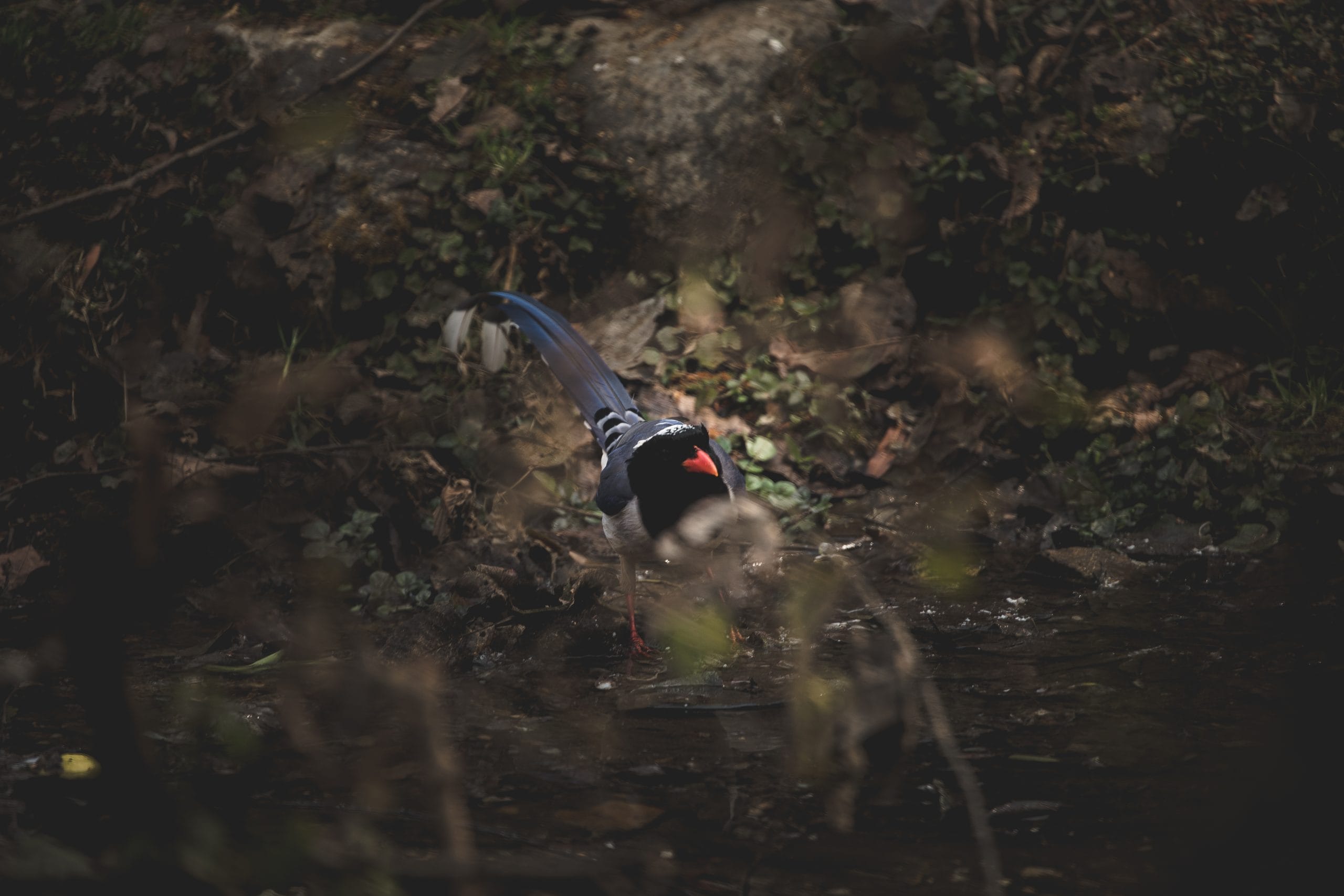
Red-billed Blue Magpie — Vibrancy in the Wild
Shot in the forested heights of Lalitpur at about 1600 meters, the Red-billed Blue Magpie reveals the beauty and charisma that define Nepal’s birdlife.
Red-billed Blue Magpie (Nepali: चिलचिलो चिउँरी) — A Long-Tailed Jewel of the Himalayan Forests
The Red-billed Blue Magpie, known in Nepali as (Chilchilo Chiuri), is one of the most visually captivating birds found across the Himalayan region. Its glossy black head, deep blue wings, sweeping tail, and bright red bill give it an unmistakable presence. As a member of the intelligent crow family, it combines sharp instincts with vibrant plumage. Its long, flowing tail — often longer than its entire body — creates a graceful, ribbon-like movement as it glides through the forest canopy.
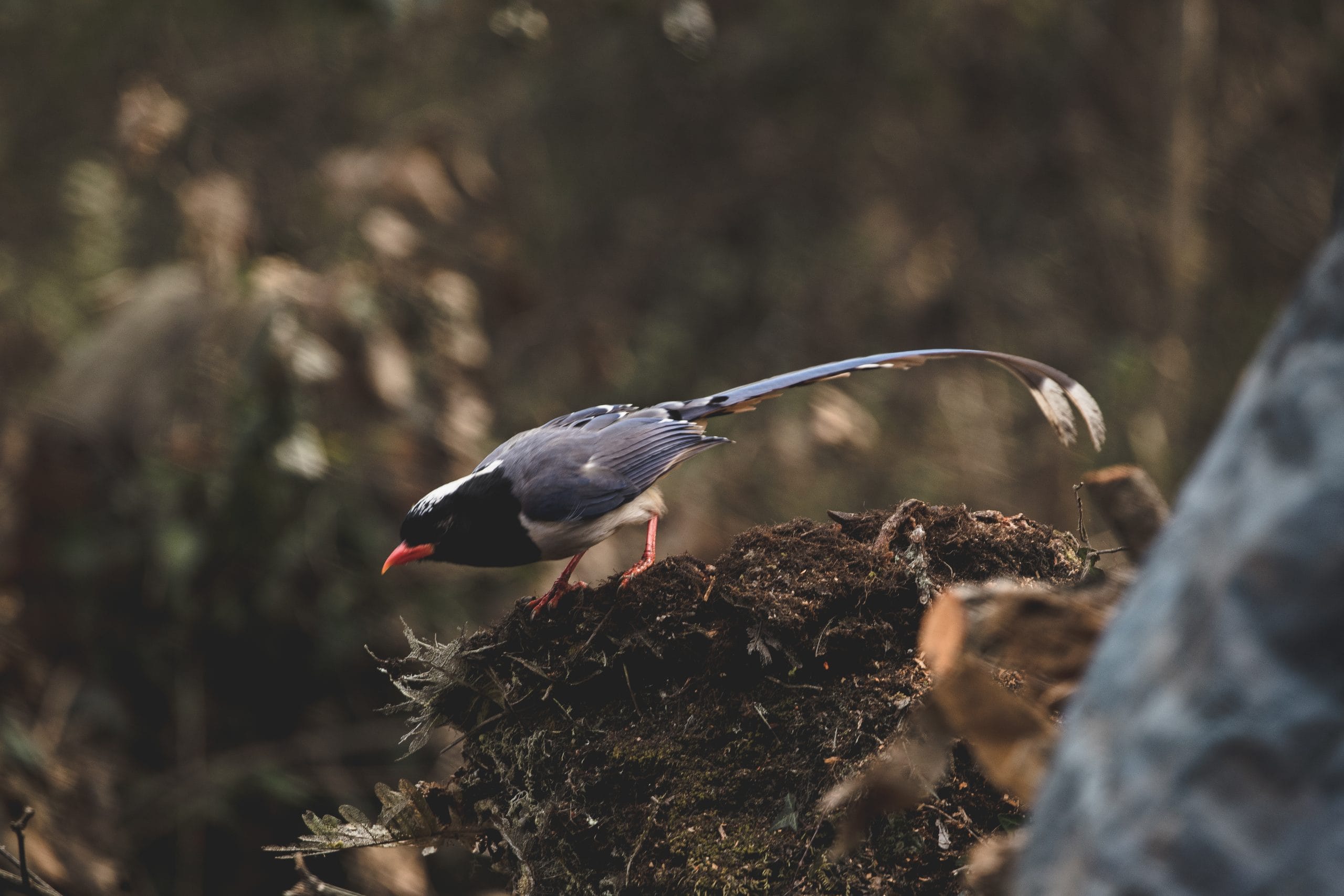
Wide Himalayan Range — From Forest Slopes to Village Edges
This species is widely distributed across the Himalayan belt, from the western mountains through Nepal and into Bhutan, Northeast India, Myanmar, and southern China. It prefers mixed broadleaf forests, oak-pine woodlands, and forest edges where light filters through canopy gaps. The Red-billed Blue Magpie adapts well to human presence and is frequently seen near terraced fields, forest trails, and rural settlements, making it a familiar companion in many mid-hill landscapes.
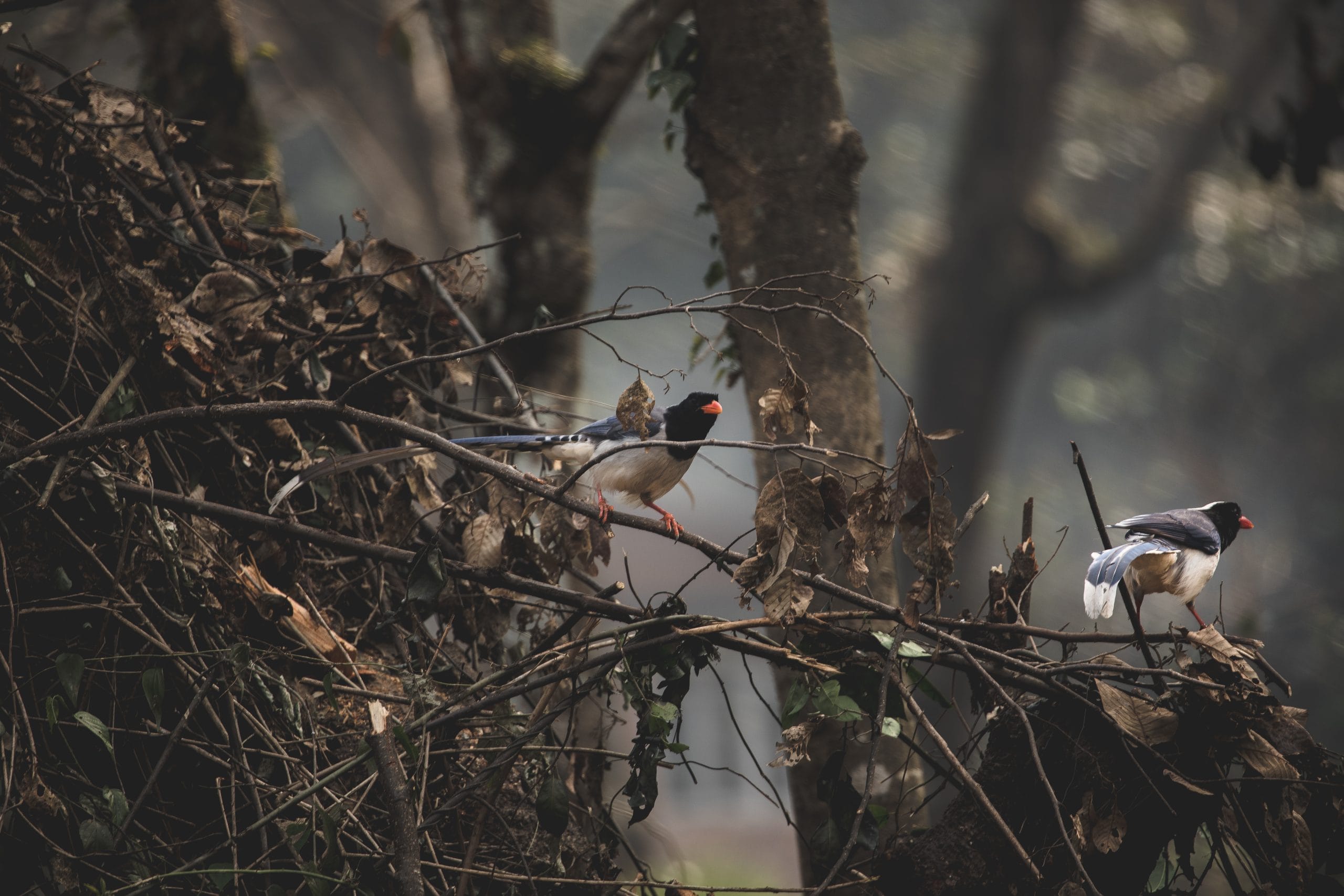
Intelligent and Social — A Curious Forager of the Mid-Hills
Red-billed Blue Magpies are highly social birds that travel in active family groups, maintaining constant communication through varied calls — from sharp alarms to melodious whistles. Their diet is broad and adaptable, including insects, fruits, berries, small reptiles, seeds, and occasionally eggs. This flexibility allows them to thrive year-round across different habitats. Their long tail aids in balance and maneuverability, giving them a distinctive elegance as they move swiftly through branches.
Vocal Expressions, Nesting Habits & Conservation Importance
These magpies are known for their rich vocal repertoire, often mimicking other birds and producing an array of calls that echo across hillsides. During breeding season, they build shallow nests in tall trees or dense shrubs, usually laying 3–5 eggs. Although the species remains stable and is not currently threatened, its survival still relies on healthy woodland ecosystems. Protecting mixed Himalayan forests ensures the continued presence of this charismatic and culturally significant bird.
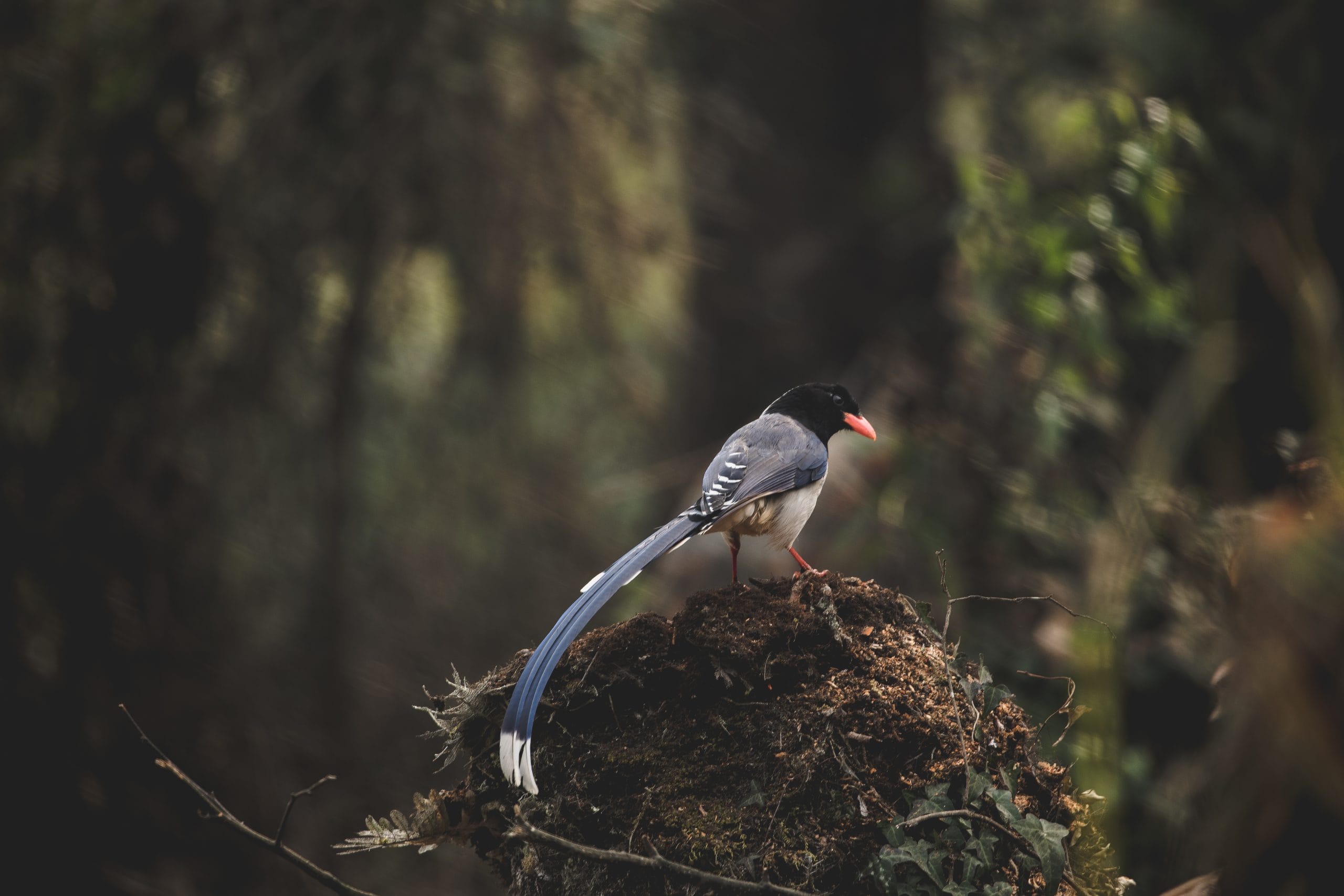
A Symbol of Himalayan Wilderness — Cultural Presence and Ecological Role
Beyond its striking beauty, the Red-billed Blue Magpie holds an important place in Himalayan ecology and culture. Its habit of scattering seeds while feeding helps regenerate forest vegetation, making it a silent contributor to woodland health. In many hill communities, the magpie’s loud calls are seen as signs of activity and life in the forest, often heard at dawn as villagers begin their day. Its bold nature, intelligence, and adaptability have made it a familiar figure in local folklore, representing alertness, curiosity, and resilience — qualities deeply connected to the spirit of Himalayan living.