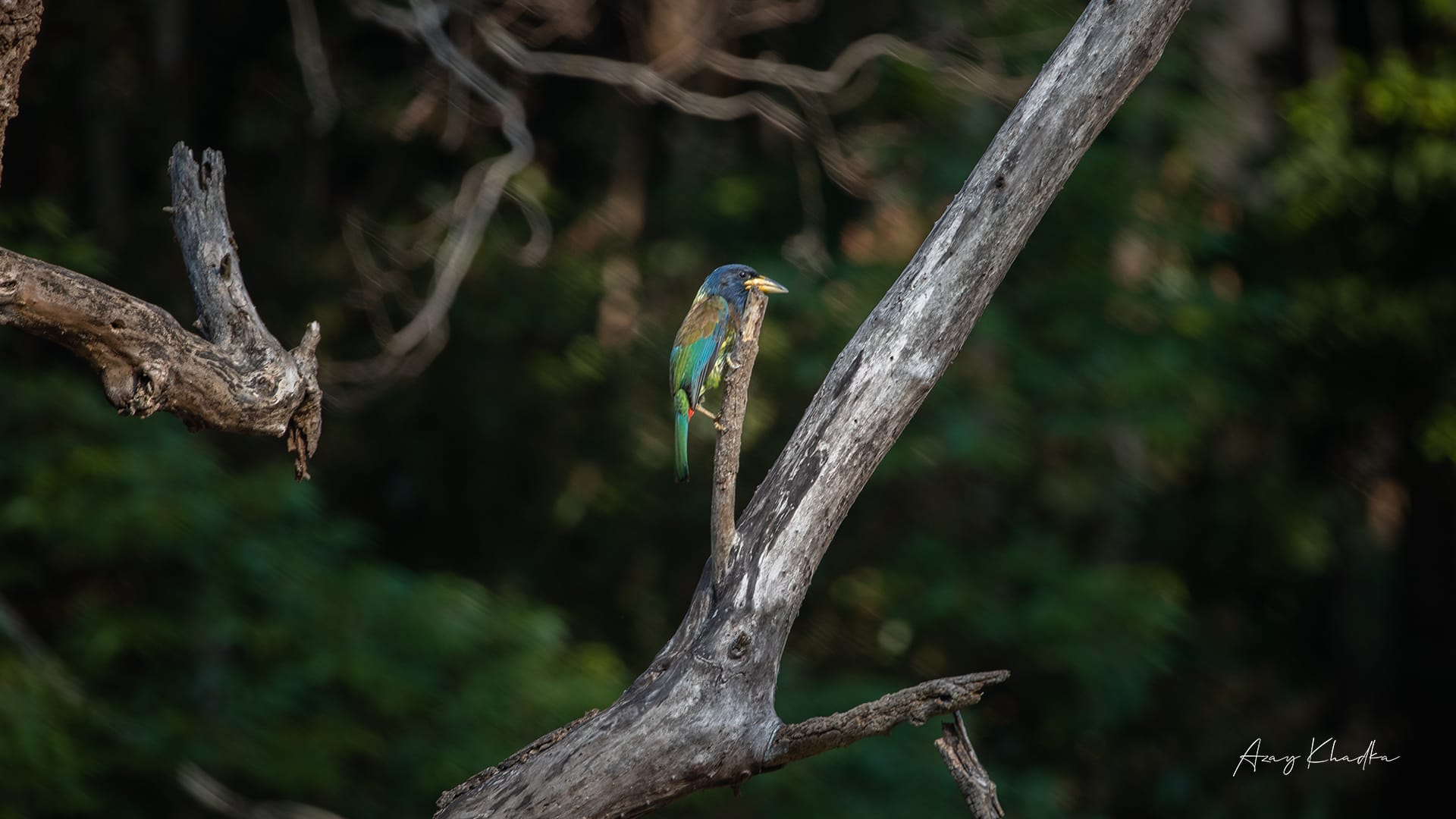
Great Barbet — A Vibrant Voice of the Himalayan Mid-Hill Forests
Photographed in the lush mid-hill forests of Lalitpur at around 1800 meters, the Great Barbet stands out as one of the Himalaya’s most colorful and commanding birds. Its deep, echoing call and striking plumage bring life to the forest canopy, capturing the essence of Nepal’s rich mountain biodiversity.
Great Barbet (Nepali: बाह्रे सुटी) — The Largest Barbet of the Himalayan Forests
The Great Barbet, known in Nepali as बाह्रे सुटी (Bahre Suti), is the largest barbet species found in the Indian subcontinent. Its striking blend of blue, green, gold, and chestnut makes it one of the most colorful birds of the mid-hills and Himalayan foothills. With a stout yellow beak and a powerful presence, the Great Barbet is best recognized by its deep, resonant “piu-piu-piu” call that echoes through forest valleys, announcing its presence long before it appears.
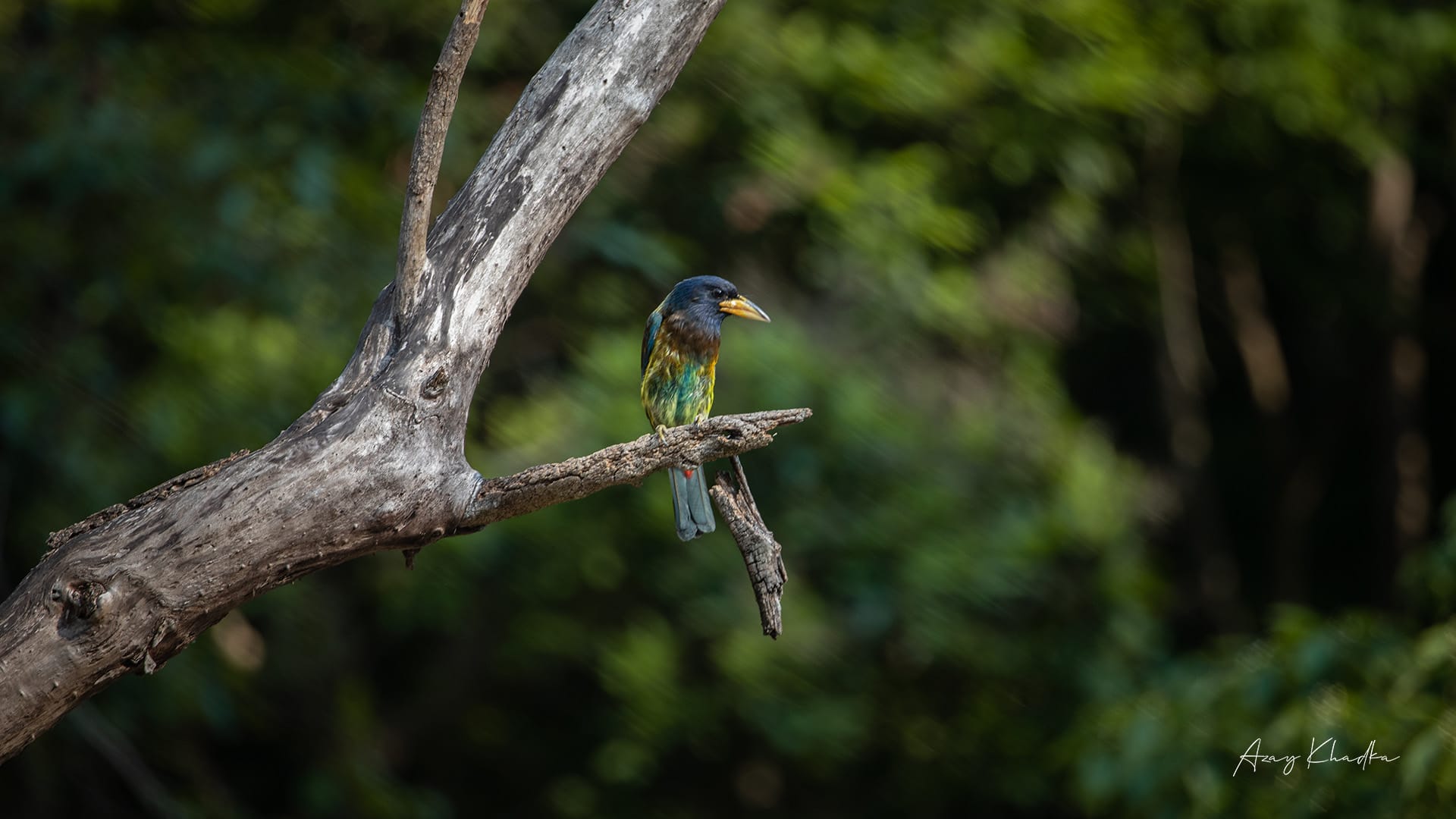
Wide Himalayan Distribution — From Evergreen Valleys to Mid-Hill Slopes
The Great Barbet inhabits a broad range across the Himalayas, including Nepal, India, Bhutan, and parts of Southeast Asia. In Nepal, it is commonly found in subtropical and temperate forests, especially in mixed broadleaf woodlands and rhododendron belts. It prefers areas with tall trees and dense canopy cover, where it can perch high above the landscape. The species thrives in elevations ranging from the low hill regions to over 3,000 meters, following fruiting trees across the seasons.
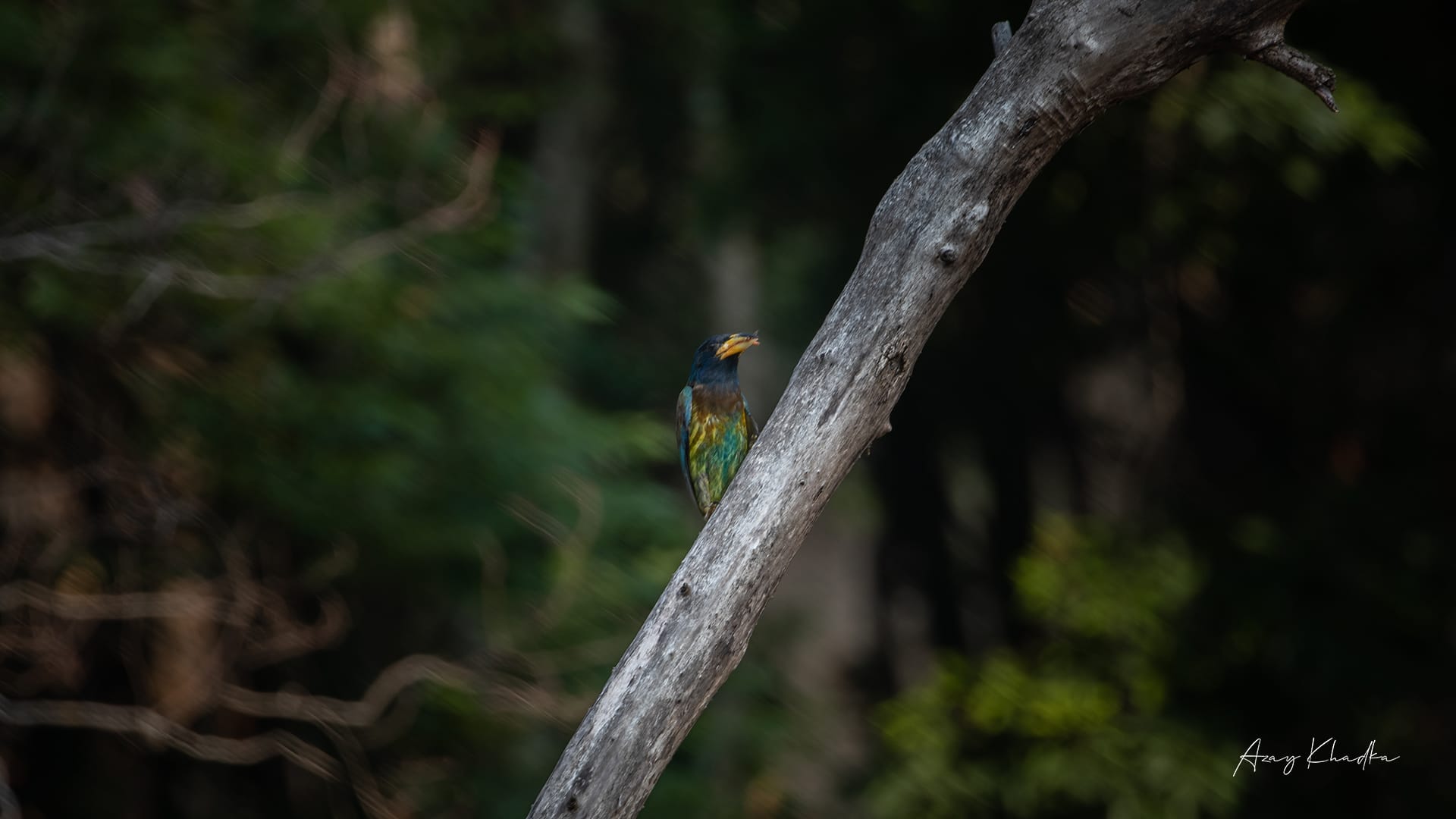
Frugivore With a Mighty Beak — Feeding Behavior and Ecology
This barbet is primarily a frugivore, feeding on berries, figs, wild fruits, and occasionally insects or flower buds. Its powerful beak allows it to crack into firm fruits and access seeds that many birds cannot reach. As it feeds, the Great Barbet plays a vital ecological role by dispersing seeds across forest floors, contributing to forest regeneration. Its slow, deliberate movements and tendency to perch for long periods make it a calm but charismatic presence among the Himalayan canopy.
Vocal Identity, Nesting Habits & Conservation Value
The Great Barbet is known for its haunting, repetitive call — a sound so distinct that it becomes part of the natural rhythm of Himalayan forests. During breeding season, it nests in tree cavities, often excavated in old trunks or softened wood, where it lays 2–4 eggs. Despite being widespread, the species depends heavily on mature forests with large tree cavities. Habitat loss and deforestation threaten these essential nesting sites, making forest conservation crucial for the continued survival of this magnificent bird.